


Movement Matters More Than Rest
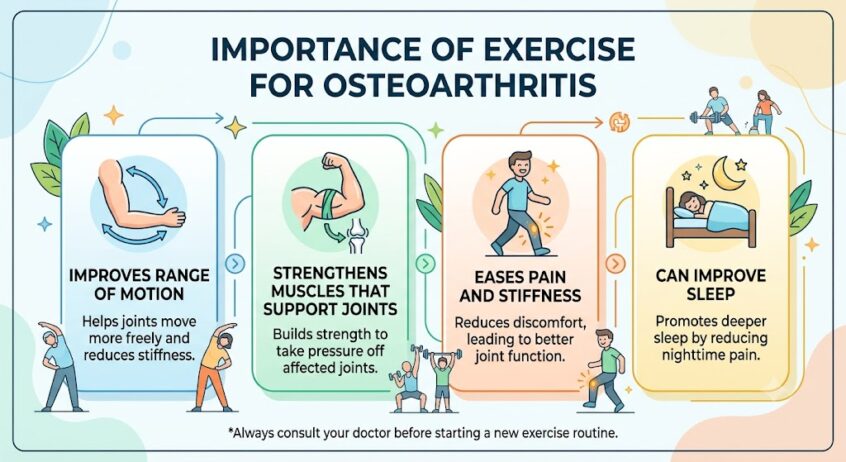
Osteoarthritis is one of the most common joint conditions affecting adults, yet many people still believe outdated ideas about how to manage it. One of the biggest myths is that if a joint hurts, the best thing to do is rest it completely. In reality, movement is one of the most helpful tools for managing osteoarthritis. Gentle, regular activity keeps joints lubricated, strengthens the muscles that support them, and can actually reduce pain over time. Long periods of rest, on the other hand, often lead to stiffness and further muscle weakness, which can make symptoms worse rather than better.

Where It Shows Up and Early Signs to Watch For
Many think this is an old age condition, but it can start even in our 30’s without us feeling any symptoms. Osteoarthritis most commonly affects the knees, hips, hands, and spine, though it can occur in almost any joint. Early signs are easy to overlook because they often come and go. These can include mild stiffness in the morning that eases within about half an hour, a dull ache after activity, or slight swelling around a joint. Some people also notice a grinding or clicking sensation when moving the affected joint. In most cases, in the early stages, some people don’t feel pain at all, so it is worth paying attention to small changes rather than waiting for pain to become constant or severe.

Eating Well for Joint Health
Along with movement, what you eat can also play a role in how your joints feel. A diet rich in fruits, vegetables, whole grains, and fatty fish like salmon may help reduce inflammation in the body, which can ease joint discomfort over time. Some people also find that omega 3 supplements or vitamin D support joint and bone health, especially during the darker winter months here in Canada. As always, it is a good idea to check with your Naturopathic doctor or pharmacist before starting any new supplement, since they can interact with medications or may not be right for everyone.

Low Impact Exercise Options
For anyone managing osteoarthritis or hoping to protect their joints as they age, low impact exercise is a great place to start. Swimming and water aerobics are especially gentle, since the water supports body weight and reduces stress on joints while still allowing for a full range of motion. Cycling, whether outdoors or on a stationary bike, is another excellent option that builds strength in the legs without the repetitive impact of activities like running. Resistance band exercises can also be done at home and are useful for building strength around the joints in a controlled, low strain way.
The goal with any of these activities is consistency rather than intensity. Even short sessions done regularly can make a meaningful difference in joint comfort and function over time. If you are living with joint pain or are worried that you may have early signs of osteoarthritis and are unsure where to start, speaking with our Chiropractor, Massage Therapist or Physiotherapist can help you find an approach that fits your needs and abilities.
JUST REMEMBER TO MOVE!
Book for a Complimentary 10 minute Consult with our Chiropractor, Massage Therapist or Physiotherapist
Product of the Month
Cervical Traction Collar
20% Off
Reg price $38
Sale Price $30.40
Offer Ends August 31st

When neck muscle tension, misaligned cervical vertebrae, or neck osteoarthritis (neck bones) interfere with nerves the cervical traction collar offers a home therapy solution that can provide relief for many painful conditions.
Product Features
- Adjustable traction
- Stainless steel valve
- Easy to use
- Use anywhere
- Soft, plush velour
- Detachable hose
- One size fits most
- Expands to 19.5 cm